Digital Transformation for Nigerian SMEs: 2026 Complete Guide
Digital Transformation for Nigerian SMEs is becoming a critical topic for small business owners in Nigeria and Africa. If you’ve attended business conferences, read LinkedIn articles, or spoken with fellow entrepreneurs, you’ve likely heard the term mentioned repeatedly. But what does digital transformation really mean for your business, and how can you leverage it to grow in Nigeria’s dynamic economy?
Digital transformation is not just a corporate buzzword reserved for large companies like Dangote Group or MTN. It is a practical, achievable approach that Nigerian small and medium enterprises can adopt to stay competitive, improve customer experience, and build sustainable businesses for the future.
What Is Digital Transformation?
In simple terms, digital transformation is the process of using digital technologies to create new or improve existing business processes, culture, and customer experiences to meet changing business and market needs. It’s about reimagining how you do business in the digital age, which is particularly important in Nigeria, where mobile phone use exceeds 80% and consumers increasingly expect digital experiences.
For Nigerian SMEs, this might mean moving from manual record keeping to cloud accounting software like QuickBooks or Zoho Books, accepting payments through POS terminals and digital wallets like Flutterwave or Paystack, using WhatsApp Business to communicate with customers, or using Instagram and Facebook to reach new markets beyond your immediate location in Surulere, Wuse, or any other business area.
This comprehensive guide will walk you through everything you need to know about digital transformation for small businesses in Nigeria, from the foundational elements to practical strategies that consider our local realities like power challenges, internet connectivity issues, and budget constraints that Nigerian entrepreneurs deal with daily.
Whether you’re running a fashion boutique in Lekki, a restaurant in Garki, a logistics company in Apapa, or a professional services firm in Victoria Island, this guide offers practical insights to support your digital transformation journey.
Understanding Digital Transformation for Nigerian SMEs
Digital transformation for Nigerian small businesses is the planned adoption and integration of digital technologies into all areas of your business operations, adapted to Nigeria’s unique business environment. It fundamentally changes how you operate and deliver value to your customers while also requiring you to continually challenge the way things have always been done and embrace new ways of doing business.
For SMEs in Lagos and Abuja, digital transformation typically involves:
Digitizing manual processes: Converting paper-based workflows into digital formats. Moving from physical receipt books to digital invoicing systems, switching from Excel spreadsheets scattered across multiple devices to integrated business management platforms, or replacing physical inventory counts with barcode scanning systems.
Adopting cloud solutions: Using platforms like Google Workspace or Microsoft 365 that let you access your business data from anywhere. This is crucial when you’re stuck in Lagos traffic or traveling between your Abuja and Lagos offices. These tools let you work with your team in real time and grow without investing in expensive server equipment that also needs a constant power supply.
Implementing business automation: Using digital tools to handle repetitive tasks like sending payment reminders via SMS or WhatsApp, scheduling social media posts for your business, managing customer databases, or processing orders. This frees up your time to focus on business growth and customer relationships.
Enhancing customer experience: Using digital channels that Nigerian consumers already use daily. WhatsApp for customer service, Instagram Shopping for product catalogs, online booking systems, or delivery tracking through mobile apps. All these improve how customers interact with your business.
Embracing digital payments: Moving beyond cash-only transactions to accept payments through POS terminals, bank transfers, mobile money like OPay and PalmPay, and payment platforms like Paystack, Flutterwave, or Interswitch. This provides convenience and improves financial tracking while reducing security risks from handling large amounts of cash.
Making data-driven decisions: Moving from gut feeling decisions to insights backed by data about customer preferences, sales patterns, peak business hours, and market trends. This helps you make smarter business choices even in Nigeria’s often unpredictable economic environment.
The beauty of SME digitalization for Nigerian businesses is that it doesn’t require massive capital investment up front. Unlike large enterprises with complex old systems, small businesses often have the flexibility to adopt digital solutions step by step, testing what works in the Nigerian context and expanding successful initiatives.
Key Pillars of Digital Transformation
Understanding the foundational pillars of digital transformation helps Nigerian business owners build a complete strategy rather than adopting technologies randomly. Different frameworks identify varying numbers of pillars, but they all point to core elements that drive successful transformation.
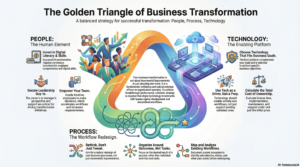
The 3 Ps of Digital Transformation
Many experts organize digital transformation around three fundamental Ps that are particularly relevant for Nigerian SMEs:
People: Your team is the heart of any transformation. This pillar focuses on building digital skills, creating a culture of innovation, and ensuring your employees embrace rather than resist change. For Nigerian SMEs, this might mean training your sales team on CRM software, teaching your accountant to use cloud tools, or partnering with consultants like Digitransformed who understand the Nigerian business context and can guide your team through the transition without overwhelming them.
Process: This involves redesigning workflows and operations to take advantage of digital capabilities. It’s about workflow optimization, which means removing bottlenecks like waiting for physical signatures on documents, reducing manual data entry that leads to errors, and creating streamlined processes that are faster and more efficient. For instance, instead of manually matching POS receipts with bank statements, integrated systems can do this automatically.
Platform or Technology: The digital tools, systems, and infrastructure that enable transformation. For Nigerian businesses, this includes selecting platforms that work reliably with our internet connectivity, have mobile-friendly designs since many Nigerians access the internet primarily through smartphones, offer local payment integration, and provide customer support during Nigerian business hours.
The 4 Pillars Framework
Another popular model identifies four key pillars essential for Nigerian SMEs:
Technology Infrastructure: The foundational digital systems, including internet connectivity, mobile technologies, cloud computing, and cybersecurity. For Nigerian businesses, this means choosing solutions that can handle occasional internet disruptions, work on mobile data when necessary, and protect your business from the increasing cyber threats targeting African businesses.
Data and Analytics: The ability to collect, store, analyze, and act on data to gain customer insights, optimize operations, and identify opportunities. Even simple analytics from your Instagram Business account or Google My Business profile can reveal patterns about when customers are most active or what products generate the most interest.
Customer Experience: All digital touchpoints and interactions that shape how customers view and engage with your brand. From your WhatsApp response time to your Instagram DM replies, from your website loading speed to how smoothly customers can place orders and track deliveries.
Innovation and Agility: The organizational ability to experiment with new technologies, adapt to Nigeria’s dynamic market conditions, and continuously improve your digital capabilities. Nigerian entrepreneurs are naturally innovative. This pillar is about directing that innovation systematically.
The 5 to 6 Pillars Comprehensive Model
For a more detailed framework, some organizations use five or six pillars that Nigerian business owners should consider:
- Digital Strategy and Leadership: Clear vision and commitment from business owners. You must champion digital transformation, not just hand it off to someone else
- Customer Centricity: Designing all digital initiatives around what Nigerian customers actually need and prefer. For instance, many prefer WhatsApp over email
- Operational Excellence: Using technology to improve internal efficiency despite infrastructure challenges
- Digital Culture: Building a team that embraces change and sees technology as an enabler, not a threat
- Technology and Innovation: Adopting the right tools for the Nigerian context and staying informed about emerging technologies
- Data Driven Insights: Making decisions based on analytics while also using local market knowledge
The specific framework matters less than ensuring you address all dimensions of transformation: people, processes, technology, and culture, rather than just buying new software and hoping it solves your problems.
Types of Digital Transformation
Digital transformation isn’t one size fits all. Different types of transformation address different business needs and opportunities. Understanding these types helps Nigerian SMEs prioritize where to focus their limited resources for maximum impact.
The 4 Main Types of Digital Transformation
- Process Transformation
This type focuses on digitizing and optimizing internal operations and workflows. Examples relevant to Nigerian SMEs include:
- Automating inventory management so you always know what stock you have without physical counting
- Implementing digital approval workflows instead of chasing managers for physical signatures
- Using project management tools like Trello or Asana for team collaboration
- Adopting digital payment systems that automatically record transactions in your accounting software
- Using bulk SMS or WhatsApp Business API for customer communication instead of manual individual messages
For a Lagos-based fashion retailer in Balogun Market, process transformation might mean implementing a simple inventory system that tracks what’s sold through your physical store, Instagram, website, and automatically alerting you when popular items are running low. This eliminates the guesswork and prevents lost sales.
- Business Model Transformation
This involves fundamentally changing how your business creates and delivers value, often opening new revenue streams. Examples from Nigerian businesses include:
- A traditional market trader launching an e-commerce store on Jumia or creating their own website
- A restaurant in Abuja or Lagos is adding delivery through their own platform or partnering with delivery services
- A training center offering online courses in addition to physical classes
- A retail shop in Aba is becoming a supplier for other businesses through a B2B platform
- A service provider shifting to subscription pricing instead of one-time payments
Many Nigerian SMEs experienced forced business model transformation during the COVID-19 lockdowns, when businesses from salons to fitness centers quickly adopted digital channels to maintain revenue when physical operations were restricted.
- Domain Transformation
This type involves using digital technologies to expand into nearby markets or entirely new business areas. Nigerian examples include:
- A catering business is launching a YouTube cooking channel and making money from it
- A logistics company is developing a digital platform that connects other businesses with delivery riders
- A fashion designer creating online courses teaching fashion design
- An accounting firm is developing financial management templates and selling them online
- A photography business offering virtual photography training to people across Nigeria and beyond
- Cultural or Organizational Transformation
Perhaps the most challenging type for Nigerian businesses, where top-down structures and “this is how we’ve always done it” attitudes can be deeply rooted. This transformation focuses on shifting mindsets, behaviors, and organizational structures to support digital ways of working. It includes:
- Encouraging experimentation and accepting that some digital initiatives may fail
- Empowering younger, digitally savvy team members to lead transformation efforts
- Breaking down the traditional “owner knows everything” mindset to embrace team learning
- Developing digital skills across your entire workforce, not just the tech-savvy team members
- Changing leadership approaches to be more flexible and data-informed while still respecting Nigerian business culture
The 5 Types Framework
Some models add a fifth type called Technology Transformation, which specifically focuses on upgrading IT infrastructure, moving to cloud platforms, and adopting emerging technologies like artificial intelligence, IoT devices for tracking, or blockchain for supply chain transparency.
Most successful SME digitalization efforts in Nigeria involve elements of multiple transformation types, typically starting with process transformation, which is the easiest and most immediately beneficial, and gradually expanding to business model and cultural transformation as digital maturity and confidence increase.
Digital Strategy for Small Businesses in Nigeria
Having a clear digital strategy for SMEs is crucial to avoid the common mistake of adopting technologies randomly without a clear plan. Many Nigerian businesses buy software or create social media accounts without a strategy, then wonder why they’re not seeing results. A digital strategy serves as your digital business roadmap, guiding your transformation efforts and ensuring they align with your overall business goals.
Components of an Effective Digital Strategy for Nigerian SMEs
Vision and Objectives: Start by spelling out what you want to achieve through digitalization. Are you mainly focused on reducing operational costs? Reaching customers beyond Lagos or Abuja? Improving cash flow through faster payments? Increasing revenue? Your objectives should be specific, measurable, and tied to real business outcomes.
Current State Assessment: Honestly evaluate your existing digital capabilities. What technologies do you currently use? What processes are still completely manual? Where are the biggest pain points? This baseline assessment helps you identify priority areas. For instance, if you’re losing customers because you can’t track deliveries, that’s a clear priority.
Customer Journey Mapping: Document how Nigerian customers currently discover, evaluate, purchase, and experience your products or services. Do they find you through Instagram? Do they prefer WhatsApp communication? Do they want to pay with bank transfers or POS? Understanding the customer journey in the Nigerian context helps you invest in the right digital touchpoints.
Technology Selection: Based on your objectives and gaps, identify the digital tools and platforms that will deliver the most value while working within Nigerian infrastructure constraints. Prioritize solutions that:
- Have mobile-friendly interfaces
- Work with intermittent internet connectivity
- Integrate with Nigerian payment gateways
- Offer affordable pricing in Naira or reasonable dollar pricing
- Provide customer support that understands the Nigerian market
Implementation Roadmap: Break your transformation into phases with clear milestones, responsibilities, and timelines. Nigerian businesses should focus on quick wins first. Maybe starting with WhatsApp Business before building a full website, or implementing digital payments before a complete inventory system.
Skills and Resources: Identify what digital skills your team needs and how you’ll develop them. This might include training sessions, bringing in consultants like Digitransformed who specialize in Nigerian SME digital transformation, or hiring young digital natives who can help drive change.
Metrics and KPIs: Define how you’ll measure success for each digital initiative. This might include tracking time saved through automation, customer acquisition cost through digital marketing, percentage of sales through digital channels, or customer satisfaction scores.
DBT in Entrepreneurship: The Nigerian Context
Digital Business Transformation, or DBT in entrepreneurship, refers to how Nigerian startup founders and small business owners systematically integrate digital technologies from the ground up or add them to existing operations.
For Nigerian entrepreneurs, DBT represents a unique opportunity. While established businesses might struggle with old systems and resistant cultures, new businesses can be born digital, building on digital foundations from day one. Whether you’re launching a fashion brand in Surulere, a logistics service in Abuja, or a food delivery business in Port Harcourt, digital channels for marketing, cloud tools for operations, and data analytics for decision making should be foundational to your business model, not afterthoughts.
The rise of successful Nigerian digital first startups like Paystack, which was acquired by Stripe, Flutterwave, Andela, and many others, shows that Nigerian entrepreneurs who embrace digital transformation can compete globally, not just locally.
Examples of Digital Transformation in Action
Real world examples help show what digital transformation looks like in practice, particularly for Nigerian SMEs that may not have the resources of large corporations.
Nigerian SME Success Stories
Fashion Retailer in Lagos: A boutique in Lekki Phase 1, moved from relying solely on walk-in customers to an omnichannel model. They launched an Instagram Shopping catalog, created a simple website using Shopify, implemented WhatsApp Business for customer inquiries, and partnered with delivery services. They used a cloud inventory system that tracked stock across their physical store and online channels. Result: Revenue increased by 250%, and they now serve customers across Lagos, Abuja, Port Harcourt, and even internationally.
Restaurant in Abuja: A small restaurant in Wuse 2 digitized its operations by creating an online ordering system, listing on delivery platforms, implementing a simple POS system, and using Instagram for marketing. They analyzed sales data to identify their best-selling dishes and optimized their menu accordingly. Result: Delivery became 45% of revenue, and data insights helped them reduce food waste by 30% while increasing profit margins.
Professional Services Firm: A Lagos-based accounting firm serving SMEs has digitized its entire client onboarding and document management process. Clients now complete forms online, upload documents securely to a cloud portal, and communicate with accountants via a client dashboard instead of physically visiting the office. The firm uses automation for routine tasks like invoice reminders and report generation. Result: 60% reduction in administrative time, ability to serve clients across multiple states, and capacity to handle twice as many clients with the same team size.
Beauty Supply Store: A beauty products retailer in Computer Village, Lagos, implemented a digital inventory system, created an active Instagram presence with product tutorials, started accepting bank transfers and POS payments, and built a WhatsApp broadcast list for announcing new products. Result: Monthly revenue grew from ₦2 million to ₦5.5 million within eight months, with 40% of sales now coming from customers who never visit the physical store.
Digital Transformation Tools for Nigerian SMEs
Successful transformation often involves using accessible, affordable digital tools that work in the Nigerian context:
AI Tools for SMEs:
- Chatbots for customer service, like ManyChat for WhatsApp automation
- AI-powered email marketing, like Mailchimp’s predictive analytics
- Automated social media scheduling with Buffer, Hootsuite, or Later for Instagram
- Voice-to-text transcription for meetings with Otter.ai
- AI-assisted content creation with ChatGPT or Jasper
Business Automation Platforms:
- QuickBooks, Zoho Books, or Wave, which is free, for accounting and invoicing
- Monday.com, Trello, or ClickUp for project management
- HubSpot CRM, with its free tier, or Zoho CRM, for customer relationship management
- Shopify, WooCommerce, or Jumia for e-commerce
Payment Solutions for Nigerian Businesses:
- Paystack or Flutterwave for online payments
- Kuda Business or Carbon for business banking
- PiggyVest Business for savings and investment
- Invoicing platforms integrated with Nigerian banks
Communication and Collaboration:
- WhatsApp Business or WhatsApp Business API for customer communication
- Slack or Microsoft Teams for internal communication
- Zoom or Google Meet for virtual meetings
- Google Workspace or Microsoft 365 for document collaboration
Nigerian Specific Platforms:
- Jumia for an e-commerce marketplace
- Jiji.ng or OLX for classified listings
- Konga for online retail
- GIG Logistics, Kwik Delivery, or SendStack for delivery services
The key is selecting tools that integrate well together and are reliable within Nigerian infrastructure constraints, creating a connected system rather than isolated software applications.
Benefits and Importance of Digital Transformation for Nigerian Businesses
The importance of digital transformation for Nigerian small businesses cannot be overstated, especially in an economy where adaptation and innovation are survival requirements.
Tangible Business Benefits
Increased Efficiency and Productivity: Automation eliminates time-consuming manual tasks that Nigerian businesses often waste hours on. Manual receipt writing, physical inventory counting, chasing customers for payments, or manually posting on multiple social media platforms. Digital tools can reduce these tasks from hours to minutes.
Cost Reduction: While digital transformation requires upfront investment, it typically reduces long-term operational costs. Digital marketing costs less than traditional advertising, cloud storage costs less than physical filing systems, digital payments reduce cash handling risks, and automation reduces the need to hire additional staff as you grow.
Enhanced Customer Experience: Nigerian consumers increasingly expect digital convenience. Digital channels give customers what they want: 24/7 access to product information, the ability to order at midnight, tracking of deliveries, quick responses via WhatsApp, and easy payment options. Meeting these expectations builds loyalty and competitive advantage.
Better Decision Making: Digital tools provide visibility into business performance that manual systems can’t match. You can see which products sell best, which marketing channels drive sales, what times are busiest, and which customers are most valuable. This enables smarter decisions about inventory, staffing, and marketing investment.
Reduced Cash Management Risks: In Nigeria, where handling large amounts of cash presents security risks, digital payments reduce your exposure to theft, robbery, or fraud while also improving financial transparency and making bank reconciliation easier.
Geographic Expansion: Digital channels enable Nigerian SMEs to reach customers beyond their immediate physical location. A business in Abuja can serve customers in Lagos, Port Harcourt, Kano, or even Nigerians in the diaspora without opening physical branches. This dramatically expands your addressable market.
Business Resilience: The COVID-19 experience taught Nigerian businesses that those with digital capabilities could adapt quickly to lockdowns and restrictions, while purely physical businesses struggled or closed. Digital transformation builds resilience against future disruptions, whether pandemics, protests, or fuel scarcity affecting physical operations.
Competitive Advantage: In markets like Lagos and Abuja, where competition is intense, digital transformation can differentiate your business. While competitors still operate manually, you can respond faster, serve customers better, and operate more efficiently.
Access to Finance: Digital businesses with proper records, digital payments, and cloud accounting find it easier to access loans and investments. Financial institutions increasingly prefer lending to businesses with transparent digital financial records over those with only manual records.
Strategic Importance in the Nigerian Context
Beyond operational benefits, digital transformation represents a strategic must-have for Nigerian SMEs. The Nigerian market is changing rapidly. Internet use is growing, smartphone adoption is increasing, digital payment infrastructure is improving, and consumer expectations are rising.
Businesses that delay digital transformation risk becoming irrelevant to Nigerian millennials and Gen Z consumers who prefer digital-first interactions. They also risk losing competitive ground to more digitally agile competitors, including foreign e-commerce platforms entering the Nigerian market.
The question isn’t whether to pursue digital transformation but how quickly you can execute it while maintaining the personal touch and relationships that Nigerian businesses are known for.
Challenges Faced by Nigerian SMEs in Digital Transformation
Despite compelling benefits, digital transformation for SMEs in Nigeria comes with unique challenges beyond what businesses in developed markets face. Understanding these obstacles helps you prepare for and overcome them.
Top 4 Challenges for Nigerian Small Businesses
- Infrastructure Constraints
Unlike businesses in countries with reliable electricity and internet, Nigerian SMEs must deal with:
- Frequent power outages that disrupt digital operations
- Inconsistent internet connectivity, especially outside major cities
- High cost of data, making cloud solutions expensive to use continuously
- Limited digital infrastructure in some business locations
Solution: Choose solutions with offline capabilities that sync when connectivity returns. Invest in backup power solutions. Prioritize mobile friendly platforms since mobile data is often more reliable than broadband. Consider hybrid approaches that combine digital and manual processes strategically.
- Limited Resources and Budget Constraints
Nigerian SMEs typically operate with:
- Very tight profit margins, especially given economic challenges
- Limited access to affordable capital for technology investment
- Naira volatility is affecting dollar-priced software subscriptions
- Small teams where everyone wears multiple hats, leaving little time for learning new systems
Solution: Start with free or low-cost tools before moving to premium solutions. Look for platforms offering Naira pricing or one-time payment options. Focus on transformations with clear, measurable ROI. Consider financing options or spreading implementation over time. Partner with consultants like Digitransformed who understand SME constraints and can recommend cost-effective approaches tailored to Nigerian budgets.
- Digital Skills Gap
Many Nigerian business owners and their teams face:
- Limited exposure to digital tools and technologies
- Difficulty evaluating which solutions are right for their business
- Uncertainty about how to implement and optimize digital technologies
- Fear of technology or resistance from older team members
- Shortage of affordable local technical support
Solution: Invest in training for your existing team. Many free resources exist on YouTube and Google. Hire young digital natives for internships or entry-level positions. Partner with consultants or agencies specializing in SME digital transformation in Nigeria. Start with user-friendly solutions that don’t require advanced technical skills. Join business networks or associations where you can learn from peers.
- Trust and Security Concerns
Nigerian businesses often worry about:
- Cybersecurity and fraud risks given Nigeria’s unfortunate reputation for online fraud
- Trusting cloud platforms with sensitive business data
- Customer reluctance to use digital payment platforms due to past fraud experiences
- Concerns about data privacy and misuse
- Vendor reliability: Will this platform still exist next year?
Solution: Choose well-established platforms with strong security track records. Use two-factor authentication and strong passwords. Educate your team on cybersecurity best practices. Start with less sensitive processes before moving critical operations digital. Build customer trust by being transparent about security measures and offering multiple payment options.
Why 70% of Digital Transformation for Nigerian SMEs Fail
Various studies suggest that 70% or more of digital transformation initiatives globally fail to achieve their objectives. For Nigerian SMEs, common failure factors include:
- Lack of a clear strategy: implementing technology without understanding what business problem it solves
- Insufficient owner commitment: handing off the transformation without genuine leadership involvement
- Choosing wrong technologies: selecting tools based on popularity rather than fit for the Nigerian context
- Inadequate change management: forcing new systems on resistant teams without proper communication
- Underestimating complexity: assuming digital transformation is just about buying software
- Poor vendor selection: choosing providers who don’t understand the Nigerian business environment
- Not measuring results: failing to track whether initiatives are actually delivering value
- Giving up too quickly: abandoning transformation efforts after initial challenges
Understanding these pitfalls helps you avoid them through careful planning, realistic expectations, adequate preparation, and commitment to seeing the transformation through.
How to Make Digital Transformation Work: 7 Step Approach for Nigerian Businesses
Success in SME digitalization requires a systematic approach adapted to the Nigerian context. Here’s a practical seven-step framework:
Step 1: Define Your Digital Vision and Objectives
Clarify what you want to achieve specifically. Don’t just say “go digital.” Specify business outcomes like “reduce payment collection time from 30 days to 7 days,” or “generate 40% of revenue from online channels within 12 months,” or “serve customers in 5 additional states without opening branches.” Your digital vision should address real problems your Nigerian business faces.
Step 2: Assess Your Current State Honestly
Conduct a realistic audit:
- What technologies are you currently using effectively?
- Which processes are fully manual and causing the most problems?
- What digital skills exist within your team?
- How do your customers prefer to interact with you?
- What are your biggest operational bottlenecks?
- What infrastructure constraints do you face in terms of power and internet?
- What budget can you realistically allocate?
This baseline assessment reveals priorities and helps you measure progress.
Step 3: Engage Your Team Early and Often
Digital transformation fails without buy-in from the people using the systems daily. Nigerian businesses often have top-down cultures, but transformation requires involving employees:
- Ask them which manual processes waste the most time
- Let them test potential solutions before full rollout
- Address their concerns about job security due to automation
- Involve them in designing new digital workflows
- Celebrate team members who embrace and champion changes
When people feel heard and contribute to decisions, resistance decreases significantly.
Step 4: Start Small with High Impact Quick Wins
Avoid trying to transform everything at once. Identify 1 or 2 quick wins that can be implemented relatively quickly with clear benefits. Success builds momentum and demonstrates value to skeptics.
For example, start by implementing WhatsApp Business for customer communication before building a full website, or digitize your invoicing and payment collection before attempting a complete ERP system.
Step 5: Choose the Right Technology Partners
Select tools and vendors carefully. For Nigerian SMEs, prioritize:
- Affordability and transparent pricing: watch for hidden fees
- Mobile-friendly design: many Nigerians primarily use smartphones
- Integration with Nigerian payment gateways and banks
- Offline capabilities for when connectivity fails
- Quality customer support available during Nigerian business hours
- Proven track record with Nigerian businesses
- Ability to start small and scale as you grow
Don’t just choose the most popular global solution. Choose what fits your specific needs, constraints, and the Nigerian business environment. Organizations like Digitransformed specialize in helping Nigerian SMEs navigate technology choices with local context in mind.
Step 6: Invest in Training and Change Management
Budget time and resources for proper training. Don’t assume people will figure out new systems on their own. Provide:
- Hands-on initial training sessions when implementing new tools
- Written guides and video tutorials for reference
- Ongoing support and refresher training as needed
- A clear process for questions and troubleshooting
- Time for practice before going fully live
Equally important is change management. Proactively address concerns, explain the why behind changes, celebrate milestones, and reinforce benefits for both the business and individuals.
Step 7: Measure, Learn, and Iterate Continuously
Establish metrics for each digital initiative and track them regularly. Review what’s working and what isn’t with complete honesty. Be willing to adjust your approach based on results and feedback.
Hold regular review sessions to assess:
- Are we achieving the intended business outcomes?
- What unexpected benefits or challenges have emerged?
- What should we start, stop, or continue?
- What should be our next priority?
- How are infrastructure constraints affecting results?
Digital transformation is not a one time project but an ongoing journey of continuous improvement. The Nigerian business environment changes constantly. Your digital strategy should change with it.
Frequently Asked Questions
What is digital transformation in simple terms?
Digital transformation is using digital technologies to improve how your business operates and serves customers. For Nigerian SMEs, it means moving from manual processes to digital tools like cloud accounting, digital payments, WhatsApp Business, and social media marketing.
What are the first steps for Digital Transformation for Nigerian SMEs?
Define clear objectives, assess your current state, identify pain points, and focus on quick wins like WhatsApp Business, digital payments through Paystack, or cloud accounting software.
Can my business go digital despite unreliable power and the internet?
Yes. Choose solutions with offline capabilities, prioritize mobile-friendly platforms, invest in backup power, and create hybrid approaches. Many Nigerian businesses have succeeded despite infrastructure challenges.
What digital tools do Nigerian SMEs need most?
Essential tools include accounting software, digital payment platforms, WhatsApp Business, social media for marketing, cloud storage, and project management tools. Start with fundamentals before specialized tools.
How long does digital transformation take?
It’s an ongoing journey, not a one-time project. Expect meaningful results from initial initiatives within 3-6 months. Start with quick wins in months 1-3, expand in months 3-6, and continue evolving.
Will digital transformation eliminate jobs?
Digital transformation changes jobs rather than eliminating them. Automation handles repetitive tasks, freeing teams for customer relationships and strategic thinking. Growth often creates new opportunities.
How do I convince my team to embrace change?
Involve teams early, address concerns openly, show how tools make work easier, let them test solutions, provide training and support, and celebrate those embracing changes.
Key Takeaways
Digital transformation for Nigerian SMEs is essential for survival and growth. It doesn’t require a massive investment or abandoning personal relationships. Instead, it enhances these strengths.
Remember:
- Digital transformation solves real problems, not just about buying technology
- Start with clear objectives aligned to your business strategy
- Take step-by-step approaches adapted to your budget
- Invest in people through training and change management
- Choose technologies that work reliably in Nigerian environments
- Measure results honestly and continuously improve
Nigerian businesses thriving today have embraced digital transformation. Those thriving tomorrow are starting their digital journey today.
Ready to Transform Your Business?
Digitransformed specializes in guiding Nigerian SMEs through successful digital transformation journeys. We understand your unique challenges: infrastructure constraints, budget limitations, skills gaps, and the need for practical solutions.
We provide locally informed guidance helping Nigerian businesses transform while maintaining personal touch and relationships.
Our services include:
- Digital business strategy for SMEs
- Coaching for professionals
- Workshops for workplace leaders
Take the first step today:
- Book a free 30-minute consultation
- Download our Digital Transformation Playbook
Contact Digitransformed and transform your Nigerian business for the digital age. Your competitors are making their move. Make yours count.
The future belongs to Nigerian businesses embracing digital transformation while maintaining entrepreneurial spirit, resilience, and customer focus. Let’s build that future together.